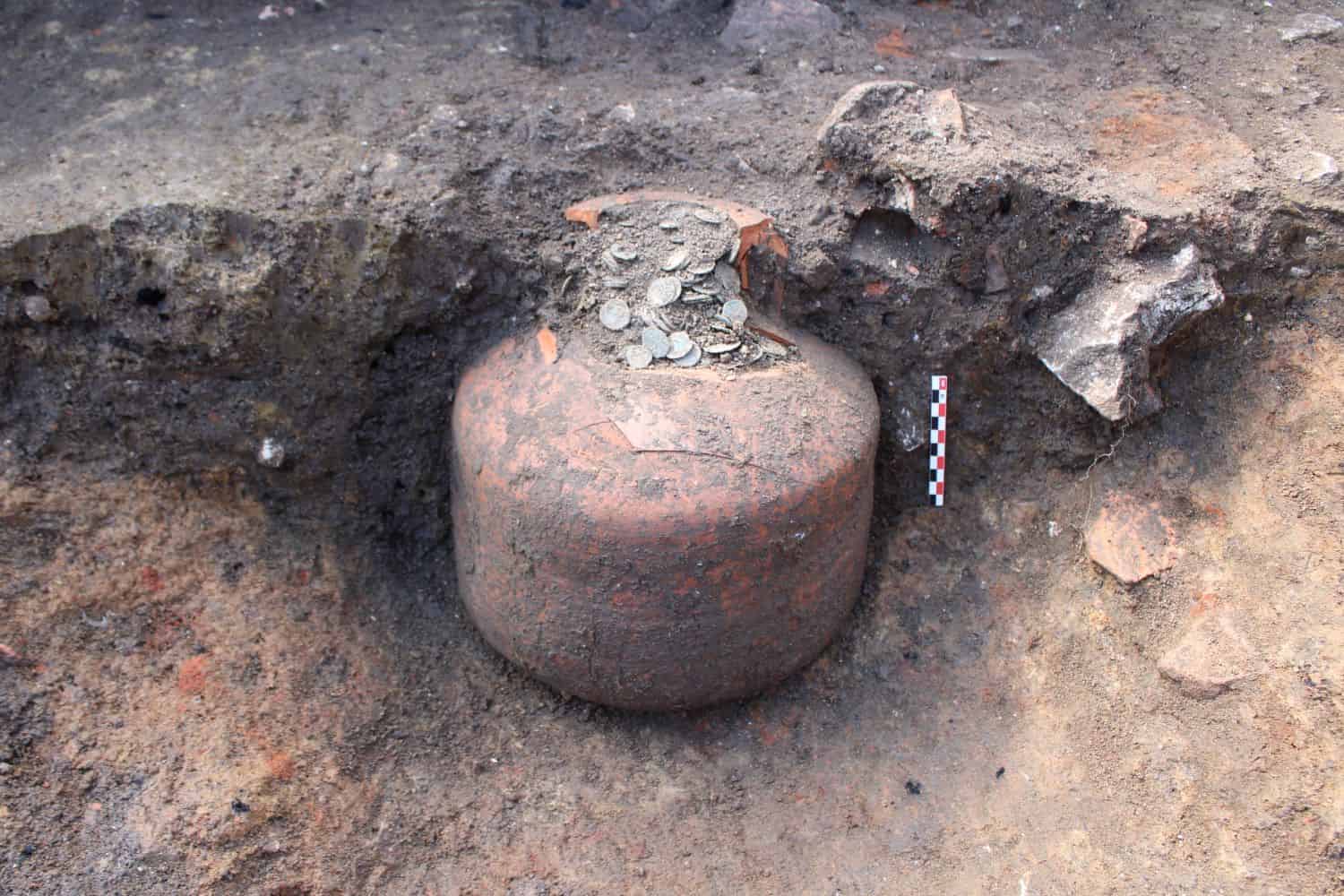
Image: A jug holding a vast number of Roman coins was found during an excavation at a French village. Credit: Simon Ritz/Inrap
Archaeologists in France found a hidden hoard of Roman coins buried beneath a village with ancient roots.
by Tudor Tarita
Archaeologists in northeastern France have uncovered an ancient neighborhood beneath the town of Senon, where they found three ceramic jars filled with Roman coins. The hoard is huge, numbering at least 25,000 bronze and copper coins from the 3rd-century CE. The discovery was made during a routine excavation. Now, the surprising find offers new insight into how people in the late Roman Empire stored and managed their money.
The dig, led by France’s National Institute for Preventive Archaeological Research (INRAP), spans 1,500 square meters. It has peeled back the layers of Senon’s past, revealing how the settlement evolved from a Gallic village into a thriving Roman town—and how, eventually, it vanished in fire.
Read the full article on ZME Science:
https://www.zmescience.com/science/archaeology/1800-year-old-roman-coins-france-archaeology/