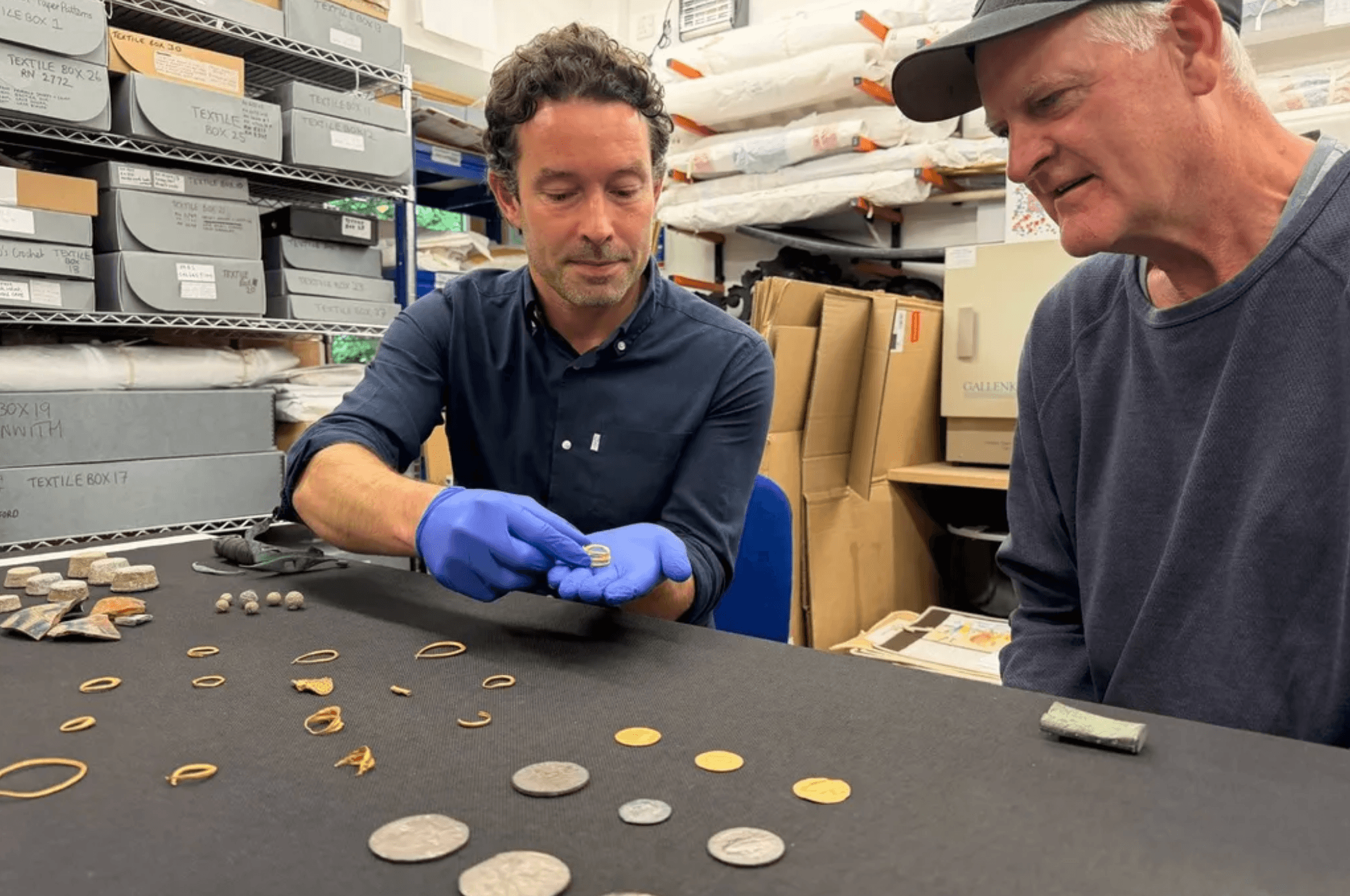
Image: Isles of Scilly Museum curator Xavier Duffy examinating recovered treasures with diver Todd Stevens Isles of Scilly Museum
See artifacts recovered thanks to a clue about the last resting place of a lost captain from an East India Company ship that went down near the Isles of Scilly
By Michele Debczak
The British ship Phoenix, helmed by William Wildy, sank off the coast of Cornwall, England, in 1680, bringing down loads of precious cargo with it. Thanks to a resourceful diver, some of those treasures have finally been recovered, and now they’re set to go on display at the Isles of Scilly Museum, not far from where the vessel made its final voyage.
Scuba diver and author Todd Stevens stumbled upon a clue to the wreck’s final resting place as he looked at an old map from the archives of the National Maritime Museum in Greenwich. When he read the words “Cap Wildy lost” written over an area west of the island of Samson, he was inspired to check out the site for himself, reports Steve Weinman for Divernet.
His investigation took him to the Western Rocks, a treacherous part of the Isles known for its history of wrecks. Suited up in his scuba gear, he explored rocky depths 15 to 130 feet below the surface and identified the remnants of a ship. Its unusual ballast, which was made from broken pieces of cannon, confirmed it as a match for the Phoenix.
Read the full article on the Smithsonian Magazine:
https://www.smithsonianmag.com/smart-news/an-archival-discovery-became-a-treasure-map-leading-a-diver-to-a-17th-century-shipwreck-carrying-coins-and-gold-jewelry-180989063/