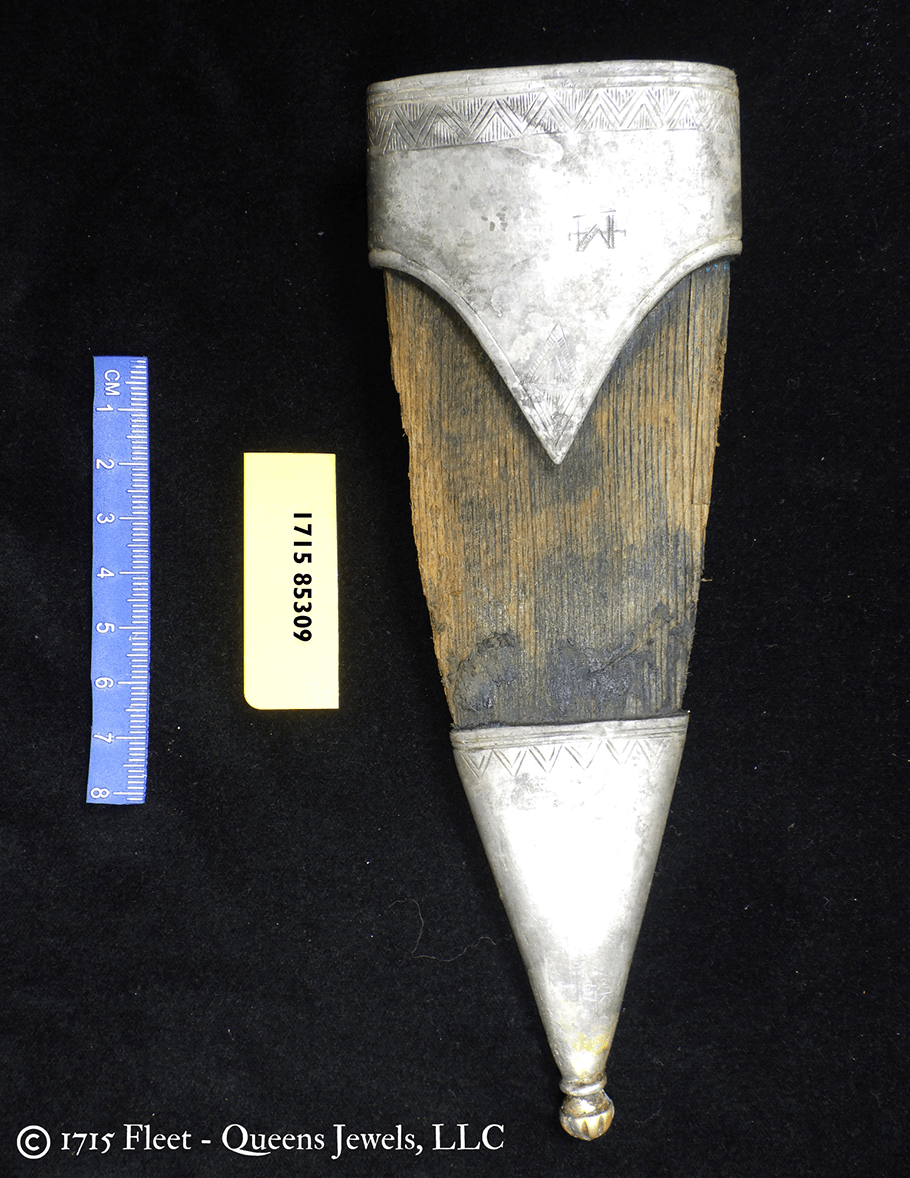
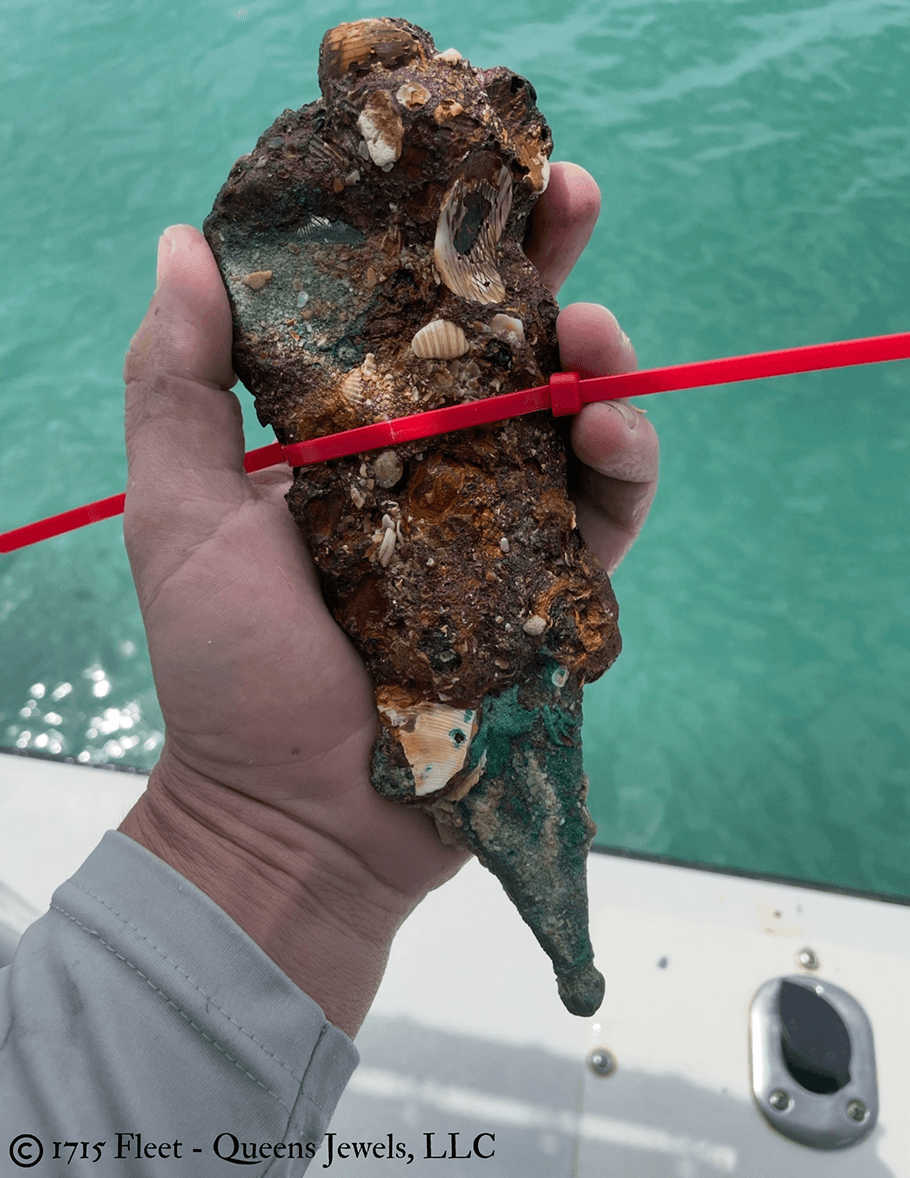
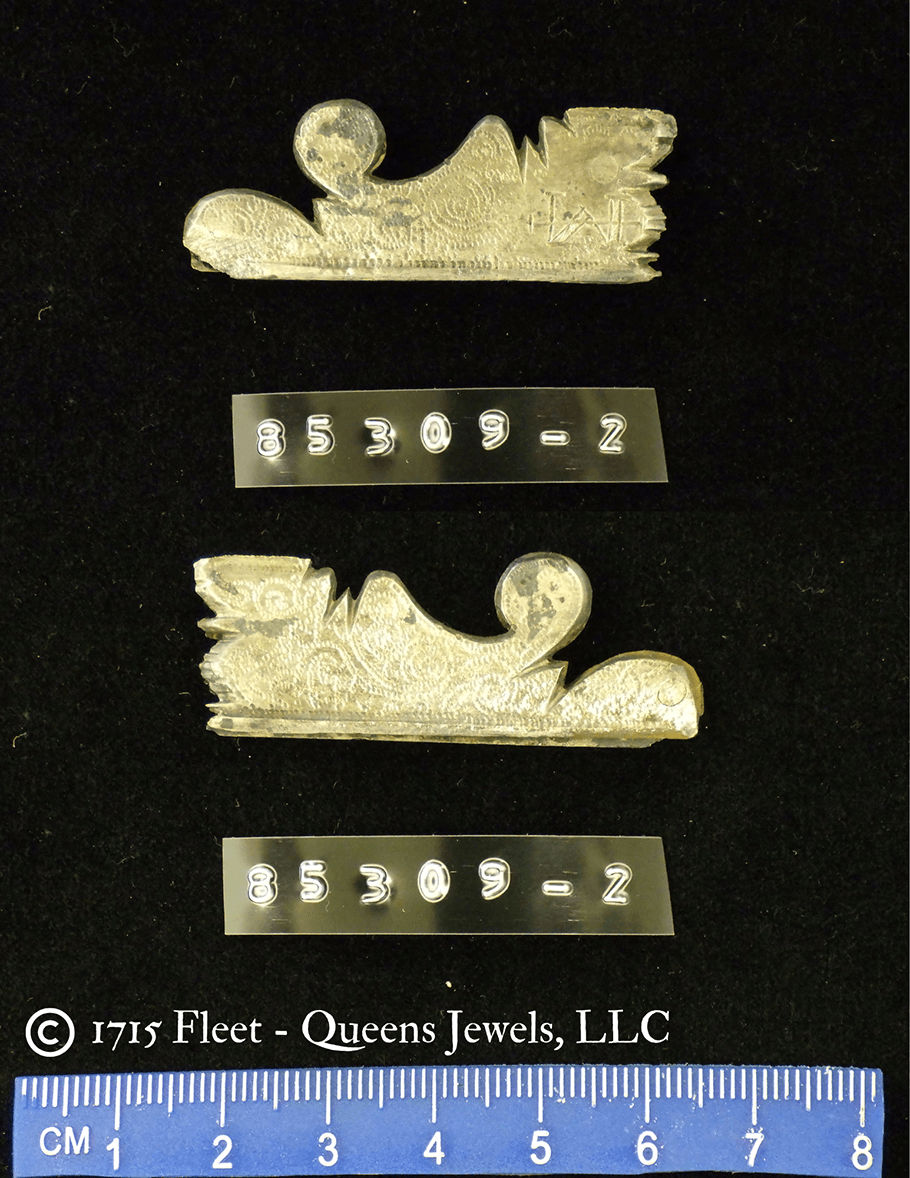
Our Treasure of the Month for December is this scabbard, which was found during the 2023 dive season by a subcontractor for 1715 Fleet-Queens Jewels, LLC.
This artifact measures approximately 7.6” long and 2.3” at its widest point. The scabbard itself is unique in that it is made of wood with silver adornments. The silver on the scabbard is engraved, as is the hand guard, which was also recovered with this piece. It is believed that there was a knife in the scabbard when it was lost, as ferrous material was found in the scabbard at the time of conservation. This supports the opinion that the knife blade was made of iron or steel and disintegrated after years of submersion.
Upon close inspection, a tiny thread can be found adhering to the back of the scabbard. This has led to the conclusion that the wood on the scabbard was covered with something, most likely leather, which would explain the remarkable state of preservation of the scabbard itself.
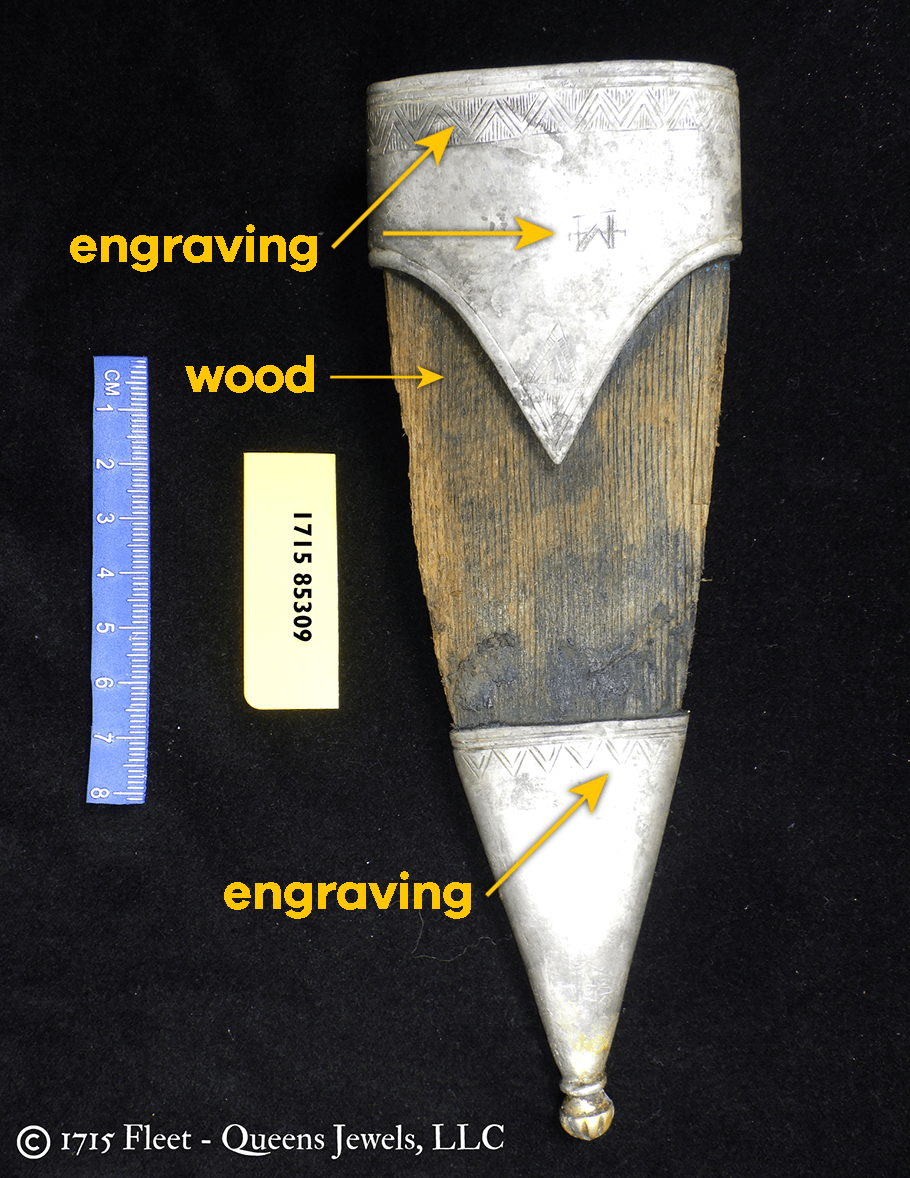
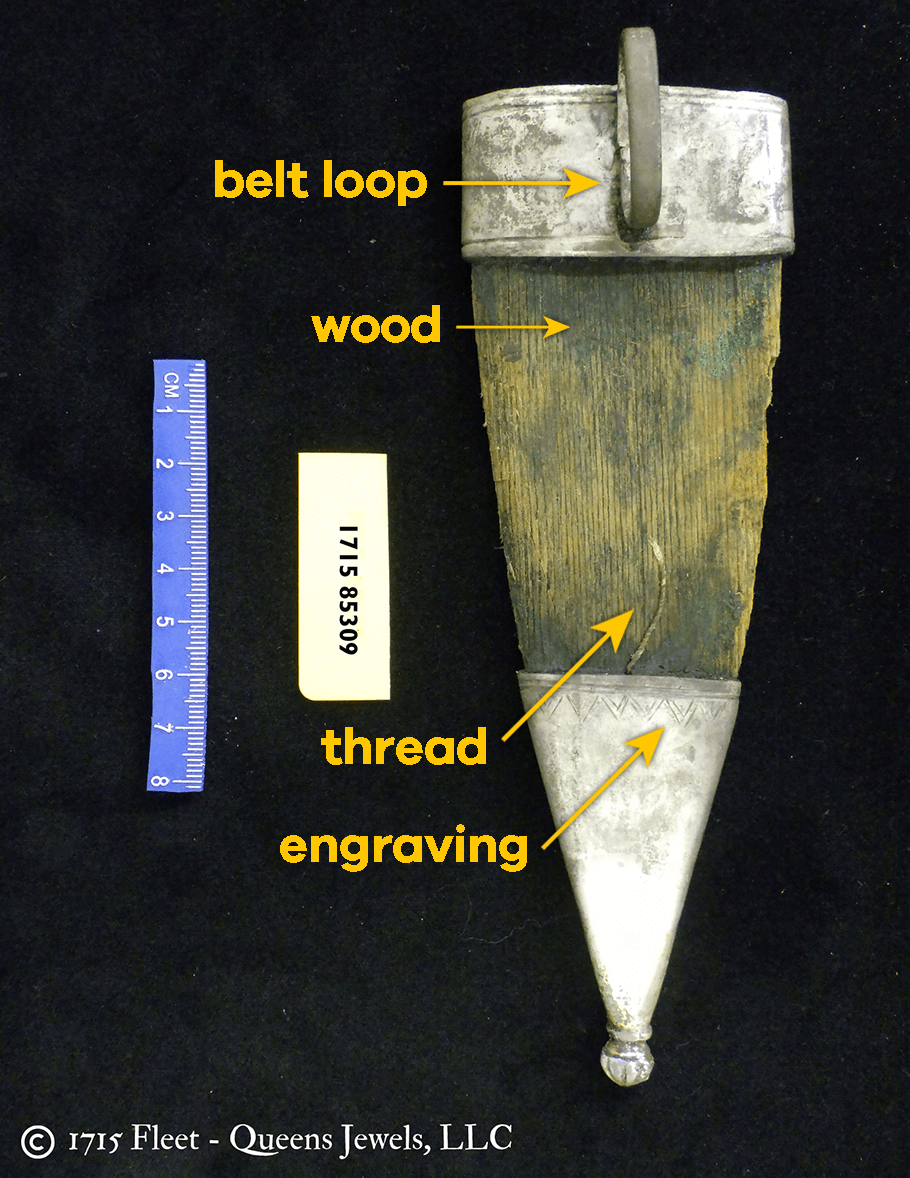
Wood does not take kindly to decades of exposure to seawater. So, another reason had to exist to explain why this artifact has survived in its current condition. This hypothesis was advanced by Sal Guttuso, Director of Operations for 1715 Fleet-Queens Jewels, LLC. His inspection of this artifact served as the basis for this determination.
But a more important question remains. Who would own such an item? Was this possibly the property of a sailor? Soldier? Passenger? What type of knife would this scabbard hold, and what could it be used for? Our research led us to believe that this scabbard might have held a trade knife, a favorite of Spanish sailors and soldiers at the time. Trade knives were cheap and readily available, so we believed that this artifact may indeed fall within that category. But all we had was a scabbard.
For a possible answer, we reached out to an expert in this field, Noel Wells. Noel authored “Small ArmsInsignia of a family or country, containing specific figures and colors and passed along through hereditary lineage. of the Spanish Treasure Fleets”. John Powell, a professor of history in St. Augustine, Florida, said this about the book: “This is a remarkable and quite original book about weaponry, well sourced and set into the framework of battle in the Spanish Main.”
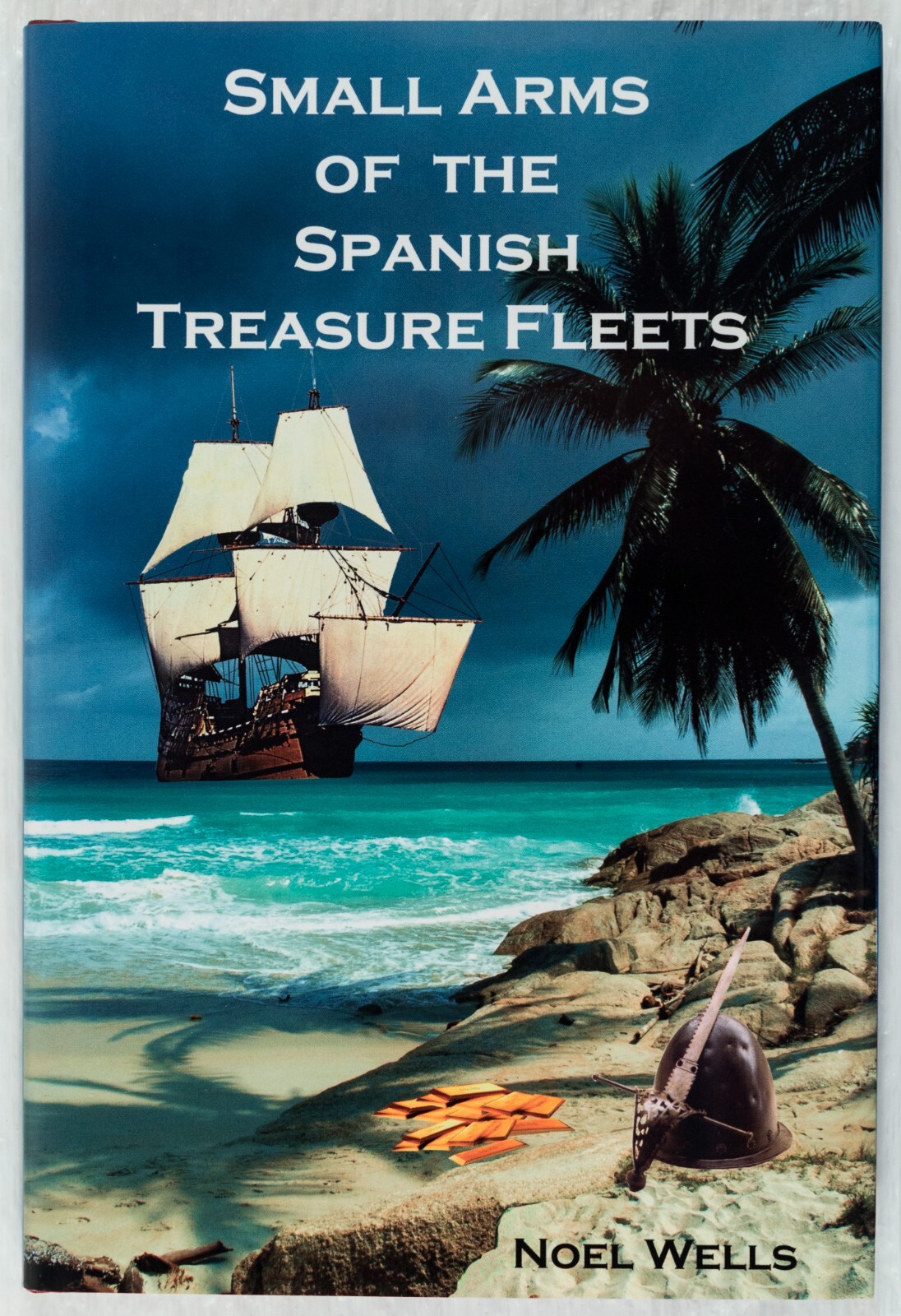
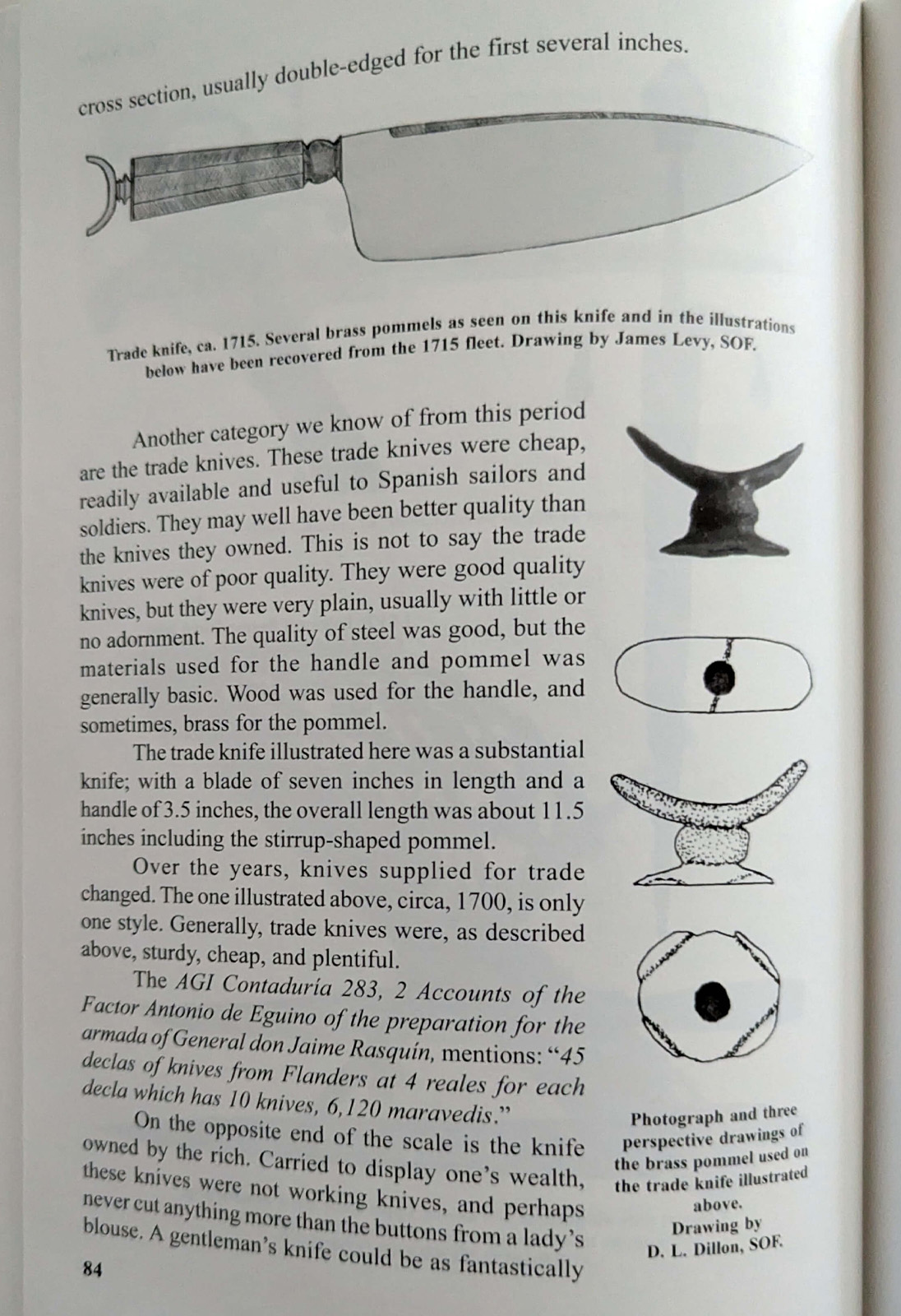
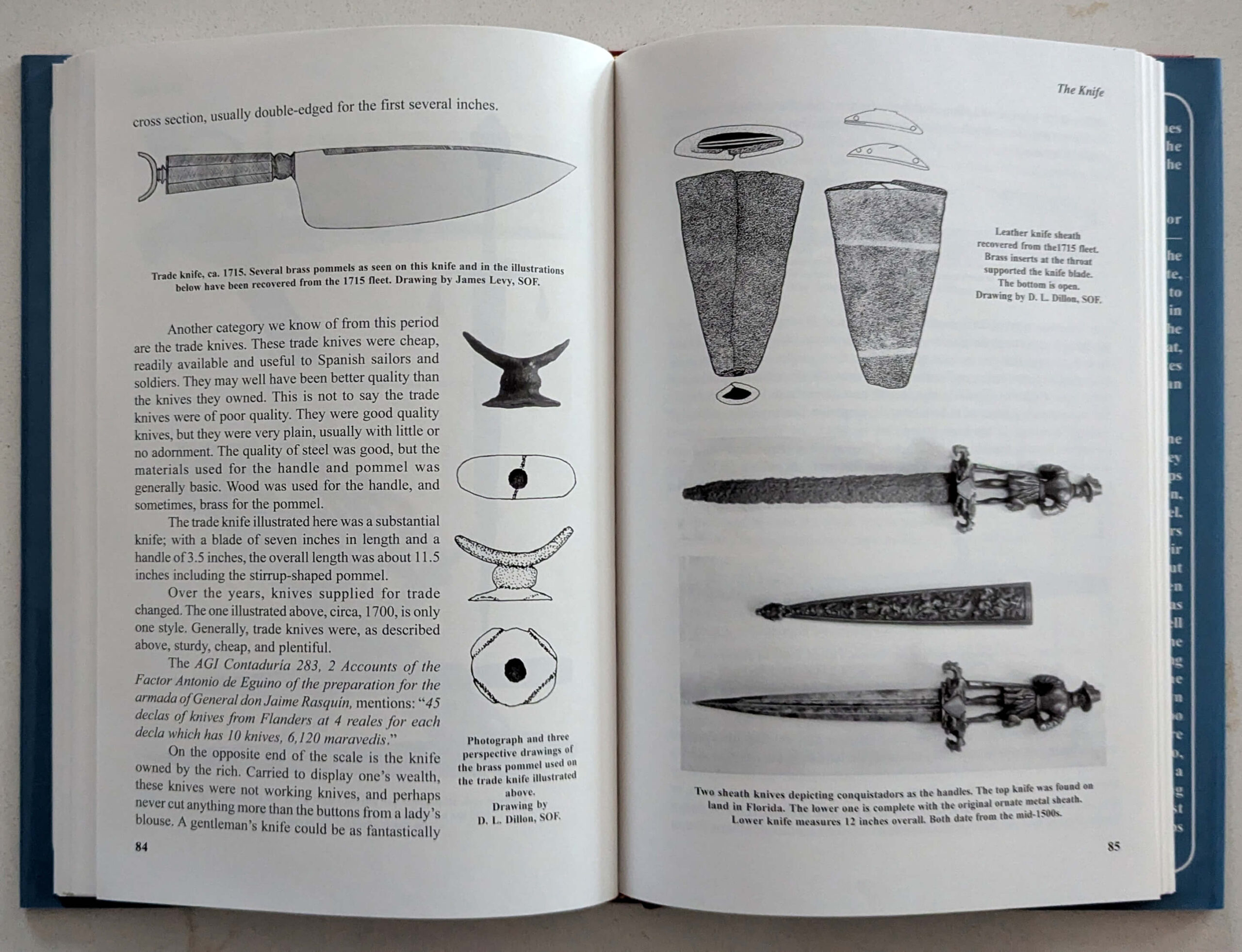
Noel was impressed with the artifact, especially how it was conserved. In his book (pages 84 and 85), there is a section dealing with trade knives. There, it is stated that trade knives were very plain, usually with no adornment. The quality of the steel used was good, but the materials used for the handle and pommel were generally basic.
While our featured treasure does not come with a knife, the scabbard does offer some clues as to who might have owned it and what type of knife it was.
Noel believed that the silver features on this scabbard suggested that it was not the property of a sailor or soldier. Although possible, it is more likely that this item was owned by an officer, or even a merchant or passenger. Also, the silver knife guard that was found with the piece lends support to this conclusion. Regardless, our featured artifact is truly a unique find.
This item was recovered by Grant Gitschlag, a diver for the MV Lilly May, a subcontractor of 1715 Fleet-Queens Jewels, LLC. The vessel was captained by Mike Penninger. The find occurred at the North Corrigan’s/South Green Cabin WreckGreen Cabin Wreck-Located about 1,000 feet south of Disney’s Vero Beach Ocean Resort. It has been identified as the San Martin, a ship from the 1618 Honduran Fleet. The San Martin, at 300 tons, was co... More site. The excellent conservation of this artifact was conducted by Mike Perna, who painstakingly worked to preserve the wood elements.
Special thanks to Sal Guttuso, Director of Operations for 1715 Fleet-Queens Jewels, LLC., who provided images and personal comments used in this text. Also, thanks to Noel Wells, who took the time to review our research and offer his opinions on our featured treasure, and allowed us to use information featured in his book.