Image: Hulton Archive/GettyImages
These words all mean pirate, but their histories tell very different stories.
By Paul Anthony Jones
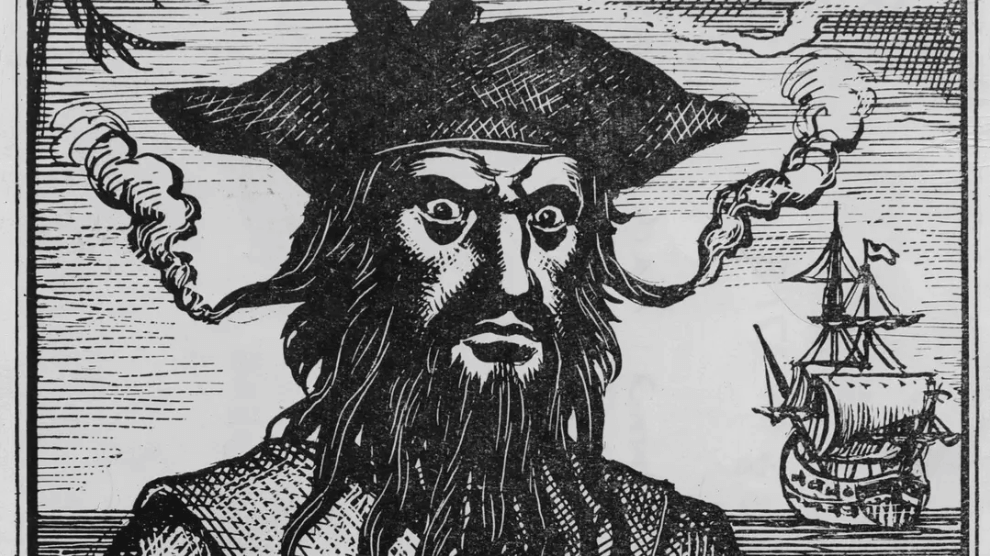
Picture a pirate in your head, and chances are you’ll imagine a surly looking man with a black skull-and-crossbones hat, eyepatch, wooden leg, a parrot perched on his shoulder, and a cutlass or flintlock pistol in hand. Much of that stereotype comes from the long-lasting popularity of Robert Louis Stevenson’s 1883 novel Treasure Island (and its innumerable big-screen adaptations), which have established the gruff captain Long John Silver as the archetypal pirate.
But what about a buccaneer? Or a swashbuckler? Or a freebooter? Words like these often get lumped into the same genre as pirate, and are all but thought of as straightforward synonyms.
Dig into these words’ histories and true meanings, though, and some subtle differences start to emerge that show our piratical vocabulary is not quite as interchangeable as it might seem.
Read the full article on Mental Floss:
https://www.mentalfloss.com/language/words/words-pirates-why-not-all-same