Update: The Only Remaining VOC-Made Gold Bar Was stolen and Never Found
By Thijs Schilder
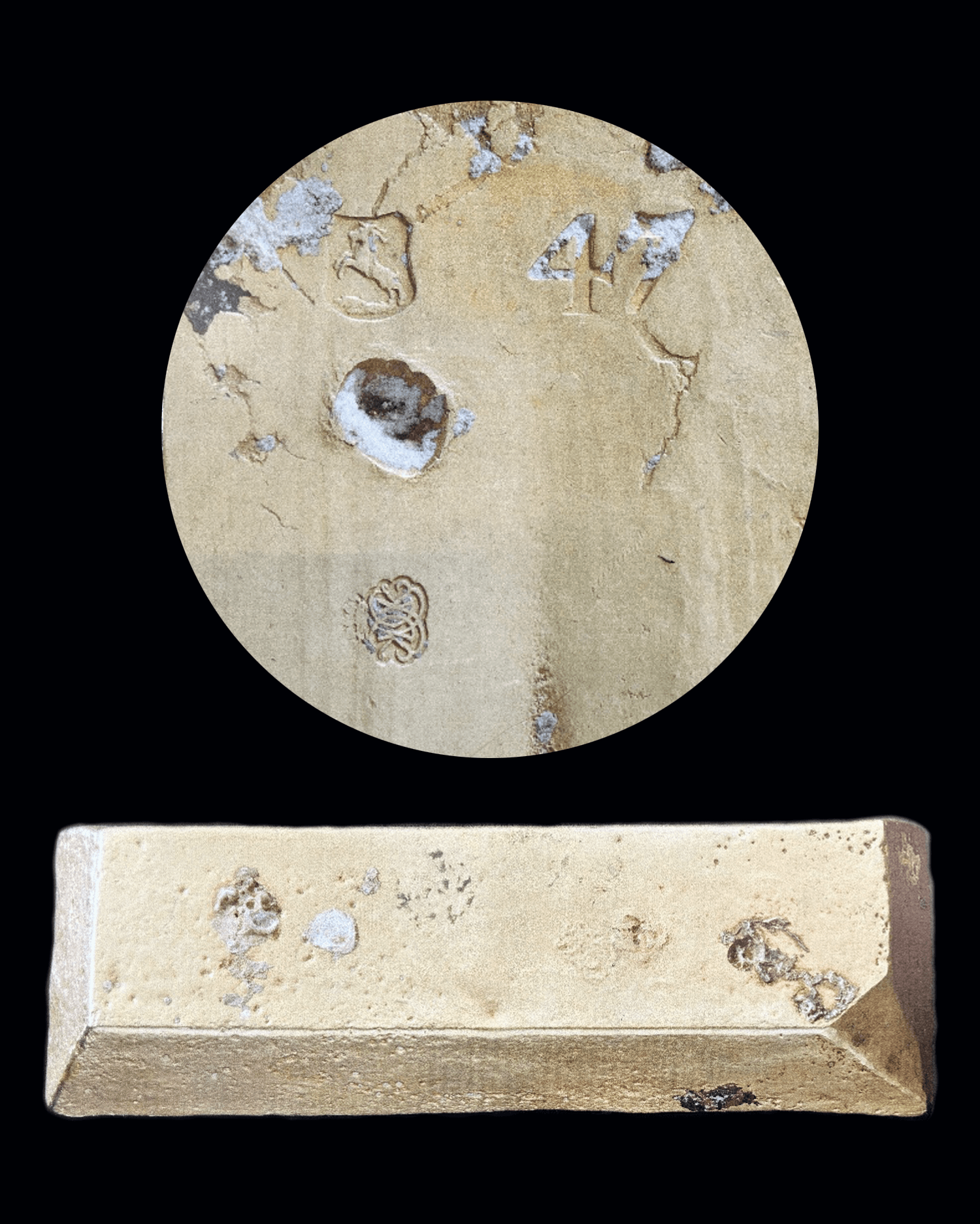
In March 2025, Wrecktreasure.com shared the story of the only VOC-made made gold bar that was ever recovered from a shipwreck and shortly after being displayed in the year 2000 was stolen, never to be seen again. If you have not read this story yet, make sure to check it out via this link. Unfortunately, we are not here today to share that after all these years this unique bar was found again. We are, however, delighted to share that original photographs of the bar have finally resurfaced.
When we conducted our research into the story of the Leimuiden shipwreck (1780) — and specifically the gold bar recovered from the wreck site — we noticed that only a single digital photograph was available, and it showed barely visible markings with no clear details. This made it incredibly hard to gain a clear understanding of how the VOC-made gold bars looked like and which specific markings were applied to them.
Unfortunately, the Dutch Royal Coin Cabinet, where the bar was on display before it was stolen, closed its doors in 2004, which made it not possible to ask them for original pictures of the bar. Much of its collection, however, was subsequently transferred to the National Numismatic Collection, managed by De Nederlandsche Bank in Amsterdam. This is why we contacted them in the hope of obtaining original photographs of the unique gold bar.
Although no digital photographs were available, two original scans of the bar were located in the physical archive. Photographs of these scans have been included in this blog. What immediately stands out on this bar are the detailed marks struck into its surface. The climbing goat visible in the upper left is the mark of the assayer from Amsterdam; this same mark also appears on the silver bars recovered from the Rooswijk. Next to it, the number 47 is clearly visible, which was the manifest number assigned to this bar. The final visible mark is a monogram topped with a crown. The exact owner or issuer of this mark is not yet known to us. The gold bar also shows several other notable characteristics beyond the stamped marks. One of the corners has been clearly trimmed to bring the bar to its intended weight. Beneath the climbing goat, a distinct bite has been taken out of the gold — the assayer’s bite, a small sample removed to test the bar’s purity. Finally, the white encrustation visible on both sides of the bar consists of coral remnants. We would like to thank conservator Pim Möhring. Without his help, we would not have obtained the photographs of this bar, and this story could not have been told.