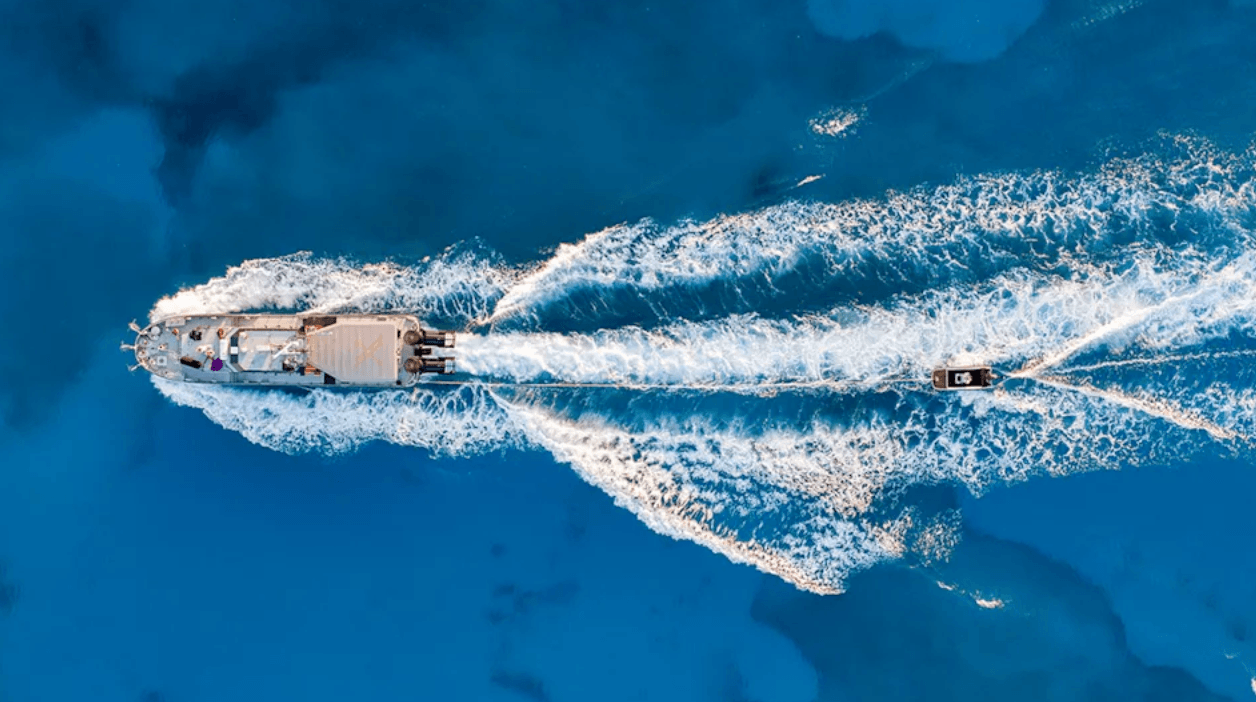
Image: Allen Exploration’s fleet includes a deep-water submersible (top), a 164-foot superyacht that serves as mothership, a 183-foot support vessel, and multiple specialized vessels for treasure hunting.
By Brett Berk
Advances in deep-sea technology—including autonomous underwater vehicles that map the ocean floor and remotely operated craft that explore wrecks—have ushered in a new era of marine discovery. Sunken treasure ships have been located off the coasts of Africa, the Caribbean, and South America. Yet growing resistance to the commercialization of archaeological heritage has made recovery increasingly expensive, contentious, and unlikely to return a profit.
“If you’re hoping to make money by treasure hunting, you’re in for a rough surprise,” says Julian Sancton. “You might as well just be throwing suitcases of cash into the sea.” Sancton’s 2026 book, Neptune’s Fortune: The Billion-Dollar Shipwreck and the Ghost of the Spanish Empire, chronicles one such case: the 2015 finding of the San José, an 18th-century Spanish galleon that sank off Colombia carrying billions of dollars’ worth of gold, silver, and jewels. Complex international maritime law, competing ownership claims, ethical infighting among academics about how best to approach the undersea historical site, and the immense technical and fiscal costs of recovery have kept its bounty on the sea floor.
Read the full article on Yahoo:
https://sg.style.yahoo.com/deep-pocketed-patrons-keeping-shipwreck-130000798.html