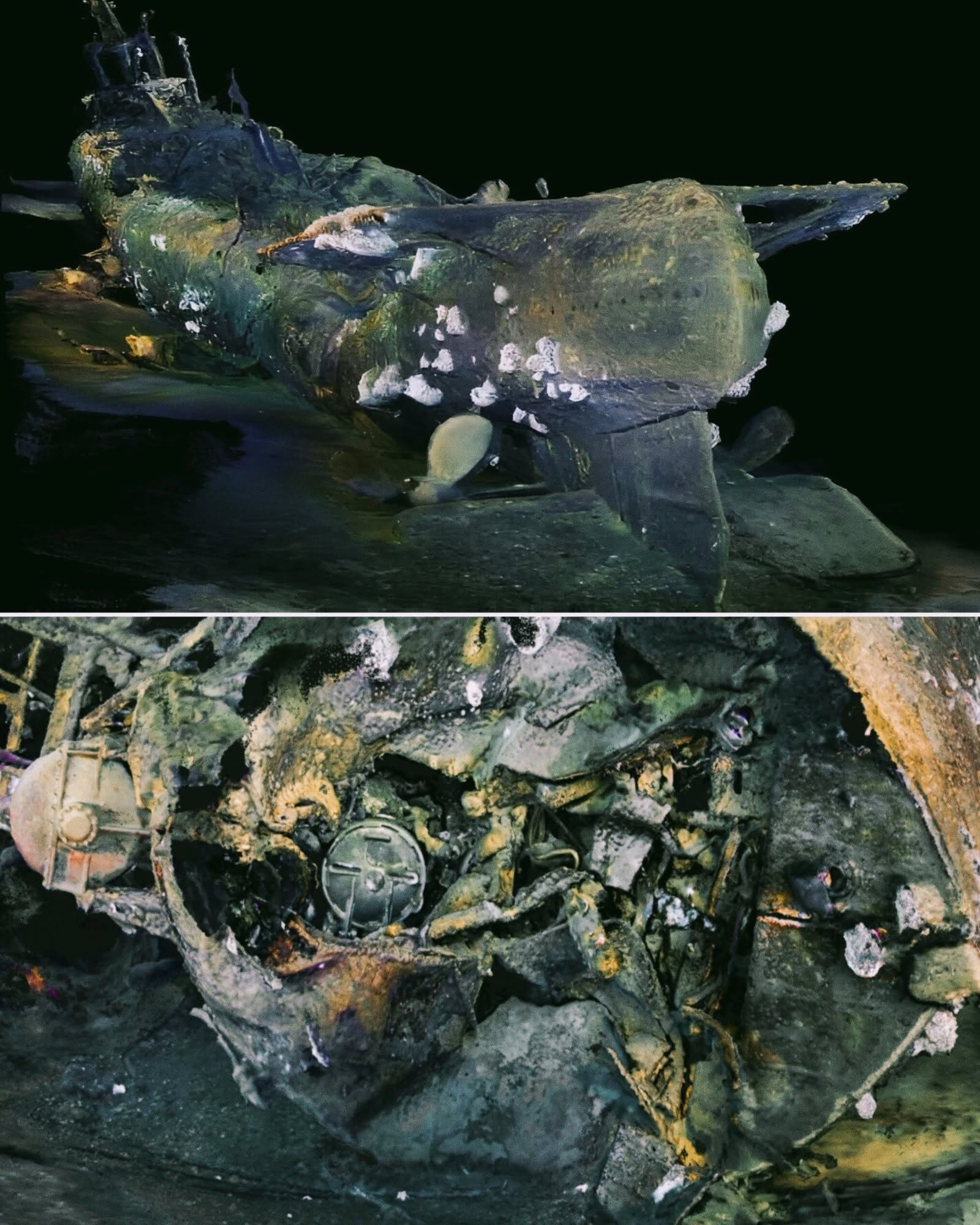
USS Grunion left Pearl Harbor on her first war patrol in June 1942 under Lieutenant Commander Mannert Abele. Off Kiska in the Aleutians, she sank two Japanese sub-chasers, then on July 30 she attacked the freighter Kano Maru. Her Mark 14 torpedoes, the weapon later proven catastrophically defective, betrayed her. One hit and flooded the freighter’s machinery room. Another ran deep. Two more struck without exploding. Grunion was never heard from again. Her 70 men were declared lost, and because captured Japanese records showed no anti-submarine attacks in that area, nobody could explain what had happened to her.
The break came 56 years later and had nothing to do with the Navy. In 1998, an Air Force officer named Richard Lane paid one dollar in a Denver antiques store for a wiring diagram of a winch from a Japanese cargo ship called Kano Maru. Wanting to know if it was genuine, he posted a query online in 2001. A Japanese historian named Yutaka Iwasaki replied that it was authentic, and that he thought he knew what had happened to Grunion. Iwasaki had found and translated a 1960s Japanese maritime journal article written by an officer who served aboard Kano Maru, describing the ship’s fight with an American submarine near Kiska. Abele’s three sons, Bruce, Brad and John, used that account to fund a survey, and in 2006 sonar found a submarine almost exactly where the Japanese officer said it would be. An ROV confirmed her the following year. Her missing bow was located in 2018, a quarter mile away, having slid down a volcanic slope. Three sons found their father because someone bought a scrap of paper for a dollar.
View the original POST on Naval Nostaligia (Facebook).