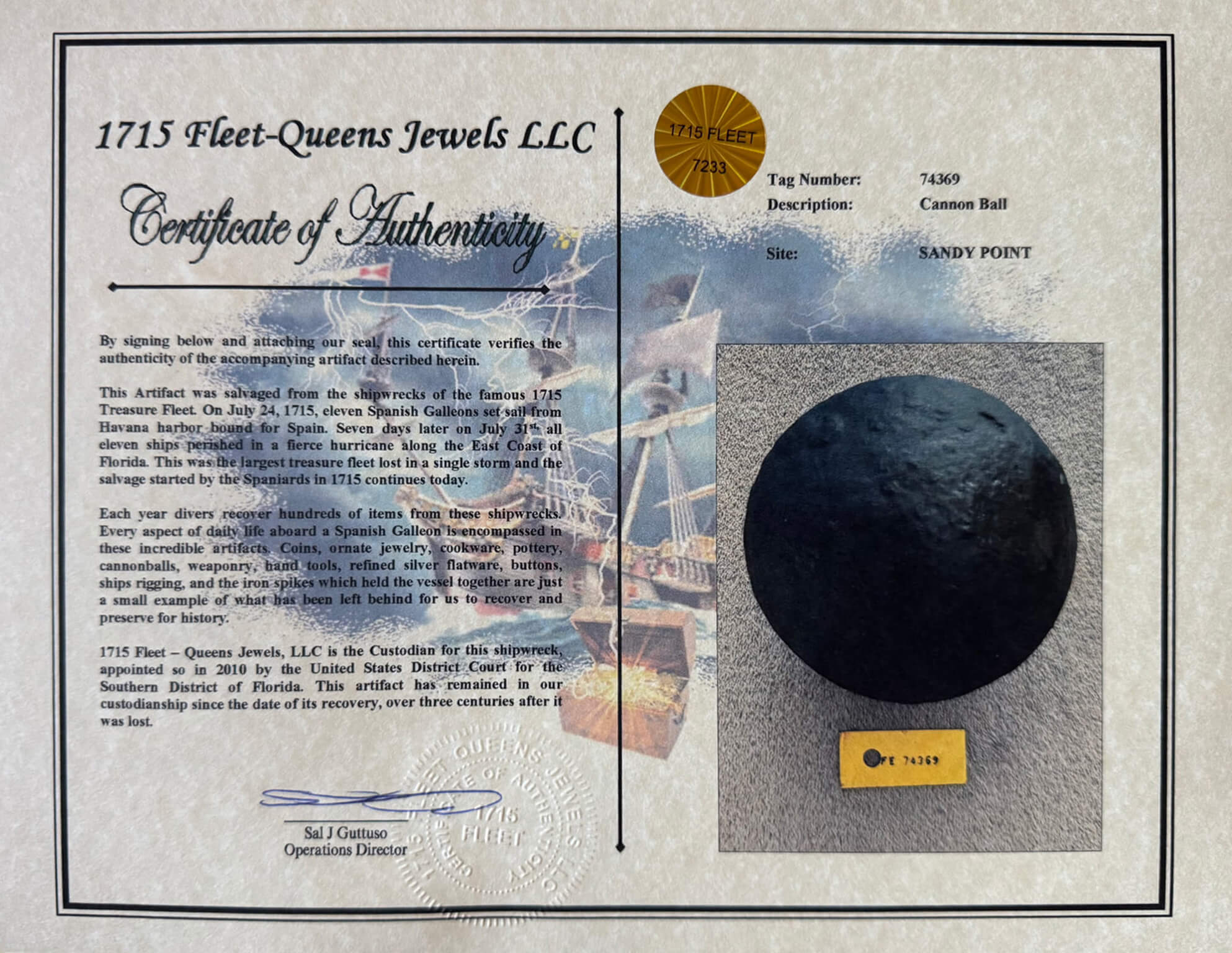
This month’s featured treasure is an item that sold for a considerable amount of money at our conference banquet and auction a few weeks ago. This iron cannonball was found in July 2015 by Chris Tisack, who was the captain of the MV AU Royal, a recovery vessel operating near the Sand Point wreck site, a few miles south of Vero Beach. Several iron cannonballs were found attached to the hard bottom, which is common to that area. The extraction process was slow and deliberate so that the cannonballs were not damaged in the process.
Our featured treasure weighs about 6 pounds and has a smooth, dark coating, which is from the conservation of the item. Without proper conservation, this iron cannonball would simply disintegrate over time, leaving behind a rusty pile of debris. This process can be seen with unconserved iron cannons and anchors located in front of government buildings in some Florida towns and cities. Fort Pierce, for example, has a rather large collection of cannons decorating the lawns of public buildings and property in that city. Regretably, they are deteriorating at a rapid rate. (See our Treasure of the Month for October 2020.)
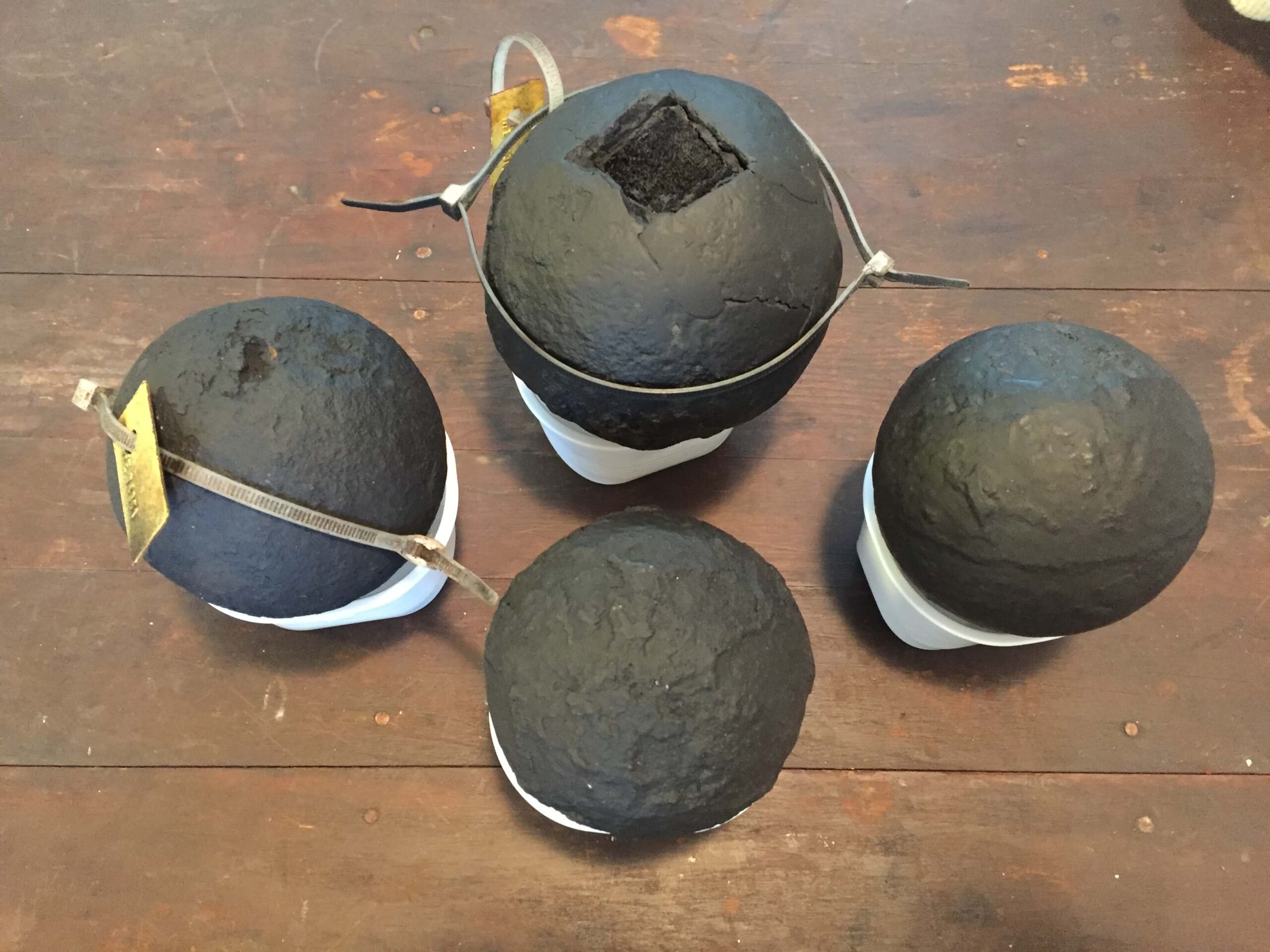
The damage caused by these seemingly small projectiles was devastating. Spanish iron cannonballs would create an avalanche of wooden splinters when they impacted. These pieces of wood, sharp and pointed, would cause horrible injuries to combatants that were unfortunate enough to be in the way.
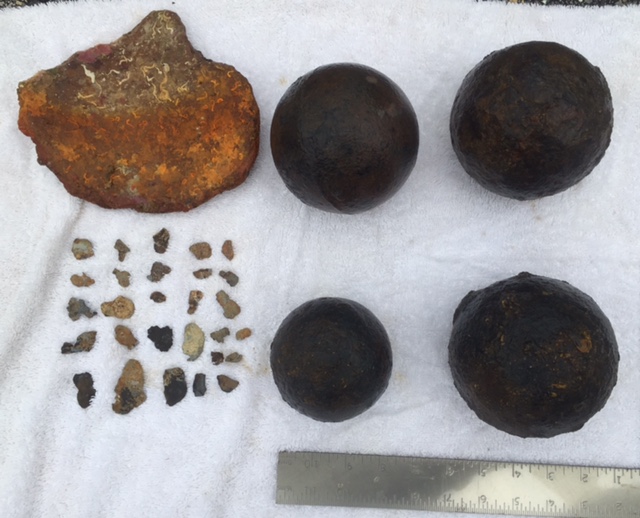
Image Credit: 1715 Fleet – Queens Jewels, LLC
In addition to cannonballs, there were hand-thrown incendiaries, which were a smaller form of cannonball. These weapons were hollowed-out iron balls packed with explosives, which were ignited by a fuse attached to a small hole in the grenade. However, they were small enough and light enough to be thrown by hand. Iron grenades of this nature were often recovered from 1715 Fleet wreck sites. Several cast-iron grenades were also found aboard the wreck of the Fleet-era pirate ship Whydah, which sank in 1717.
Iron cannonballs came in different sizes and weights. Our little ball, though small, made a big bang at our conference banquet and silent auction, where it sold for a whopping $2,000.00, drawing the highest bid of the 34 items sold!
Special thanks to Sal Guttuso (Member #226), Director of Operations for 1715 Fleet – Queens Jewels LLC, for providing images. Also, some information used in this post was obtained from Small ArmsInsignia of a family or country, containing specific figures and colors and passed along through hereditary lineage. of the Spanish Treasure Fleets, by Noel Wells (Member #227).